What do SWD and LWD mean?
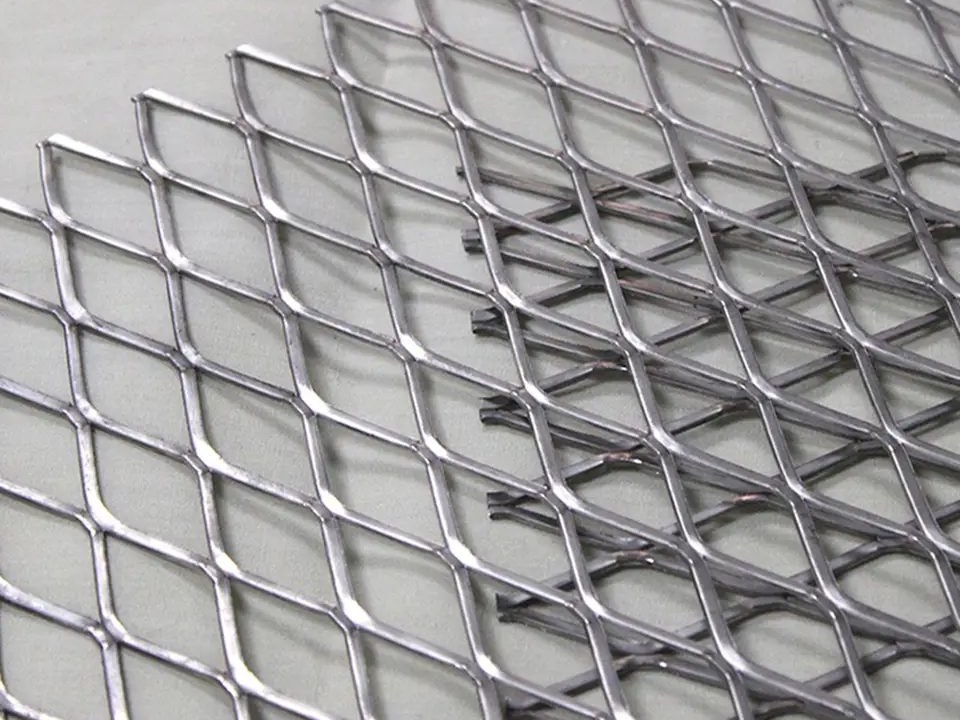
They describe the diamond opening. SWD is the short way of the diamond, the smaller dimension, and LWD is the long way. Together with the strand width and sheet thickness they define the mesh pattern and its strength.
One-piece plate mesh
Expanded mesh is cut and stretched from a single metal plate, so there are no welded joints and no loose strands. The result is a rigid, one-piece sheet that ventilates, drains and resists slipping. Sheets are expanded from plate in Anping, China, in raised or flattened patterns, and can be cut, bent and framed to the drawing.
Also known as: Expanded sheet · Diamond plate mesh · Stretched metal · Raised expanded mesh
Typical range. Final dimensions, coating mass and tolerances are confirmed on the order drawing.
| SWD (short way of diamond) | 10–50 mm |
|---|---|
| LWD (long way of diamond) | 25–100 mm |
| Strand width | 1.0–5.0 mm |
| Sheet thickness | 0.5–6.0 mm |
| Material | Mild steel, galvanized steel, stainless steel or aluminium |
| Pattern | Raised (standard) or flattened for a smooth surface |
| Standard sheet size | 1,000×2,000 mm or 1,250×2,500 mm; sheets cut, bent and framed to the drawing |
| Surface finish | Mill, hot-dip galvanized, painted or powder coated |
| Fabrication | Sheets cut to size; bending, framing and edge trimming available |
| Packing | Flat bundles with edge protection |
General screens, guards and frames
Outdoor walkways, platforms and facades
Corrosive or high-hygiene environments
| Mild steel | General screens, guards and frames |
|---|---|
| Galvanized steel | Outdoor walkways, platforms and facades |
| Stainless steel | Corrosive or high-hygiene environments |
| Aluminium | Lightweight facades and decorative panels |
| Finish options | Mill, hot-dip galvanized, painted or powder coated |
Typical configuration
Raised pattern, 3–5 mm strand, galvanized
Slip-resistant surface that drains and ventilates.
Typical configuration
Small SWD, 1.5–3 mm strand
Rigid one-piece guard with good visibility.
Typical configuration
Flattened pattern, aluminium or galvanized
Decorative screening and sunshade panels.
Typical configuration
Light gauge, small diamond
Ventilated support surfaces and retainers.
They describe the diamond opening. SWD is the short way of the diamond, the smaller dimension, and LWD is the long way. Together with the strand width and sheet thickness they define the mesh pattern and its strength.
Raised mesh comes straight off the press with the strands angled, giving a slip-resistant surface and maximum stiffness. Flattened mesh is rolled after expansion, giving a smooth, thinner sheet used where a flat face or a decorative appearance is required.
Because it is one piece, it cannot unravel and it holds its shape when cut. It also uses less material for the same stiffness, which makes it economical for guards, platforms and facades.
Yes. Sheets can be cut, bent, framed and edge-trimmed. Provide the drawing or the finished dimensions, the pattern reference, the material and the finish required.
Raised pattern mesh is commonly used for walkways and platform flooring because the strands give grip. The load rating must be checked against the support spacing, sheet thickness and strand width for the specific application.
Give the SWD and LWD, strand width, sheet thickness, material and finish, then the quantity and the sheet size or cut dimensions. Where load matters — walkways and platforms — state the support spacing and the required load so the thickness and strand can be checked.
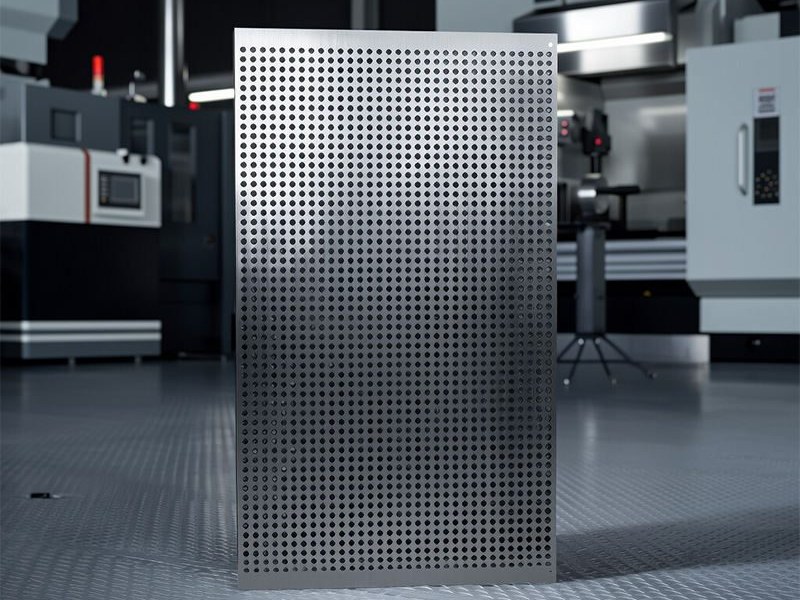
No. Expanded mesh is slit and stretched from a solid plate, so no material is removed and every strand remains part of the sheet. Punched (perforated) mesh has holes stamped through the sheet, so material is removed and the open area is set by the hole pattern. The two are specified differently: expanded mesh by SWD, LWD, strand and thickness; perforated by hole diameter, pitch and open area.
Send the SWD and LWD, strand width, sheet thickness, material, finish and the quantity required.
Send Your Requirement